CollabXR
- Status
- Active · open source
- Stack
- Unity · C# · Photon
- Context
- Purdue Envision Center (RCAC)
- Role
- Realtime Simulation Programmer
I work on CollabXR as a Realtime Simulation Programmer at Purdue's Envision Center, the visualization and XR group inside the Rosen Center for Advanced Computing. The piece I built is its playback system, a timeline that scrubs animation, audio, materials and object state together so a whole scene can be replayed in sync during a live session. Beyond this, I work on general bug testing and functionality improvements as Collab continues to grow.
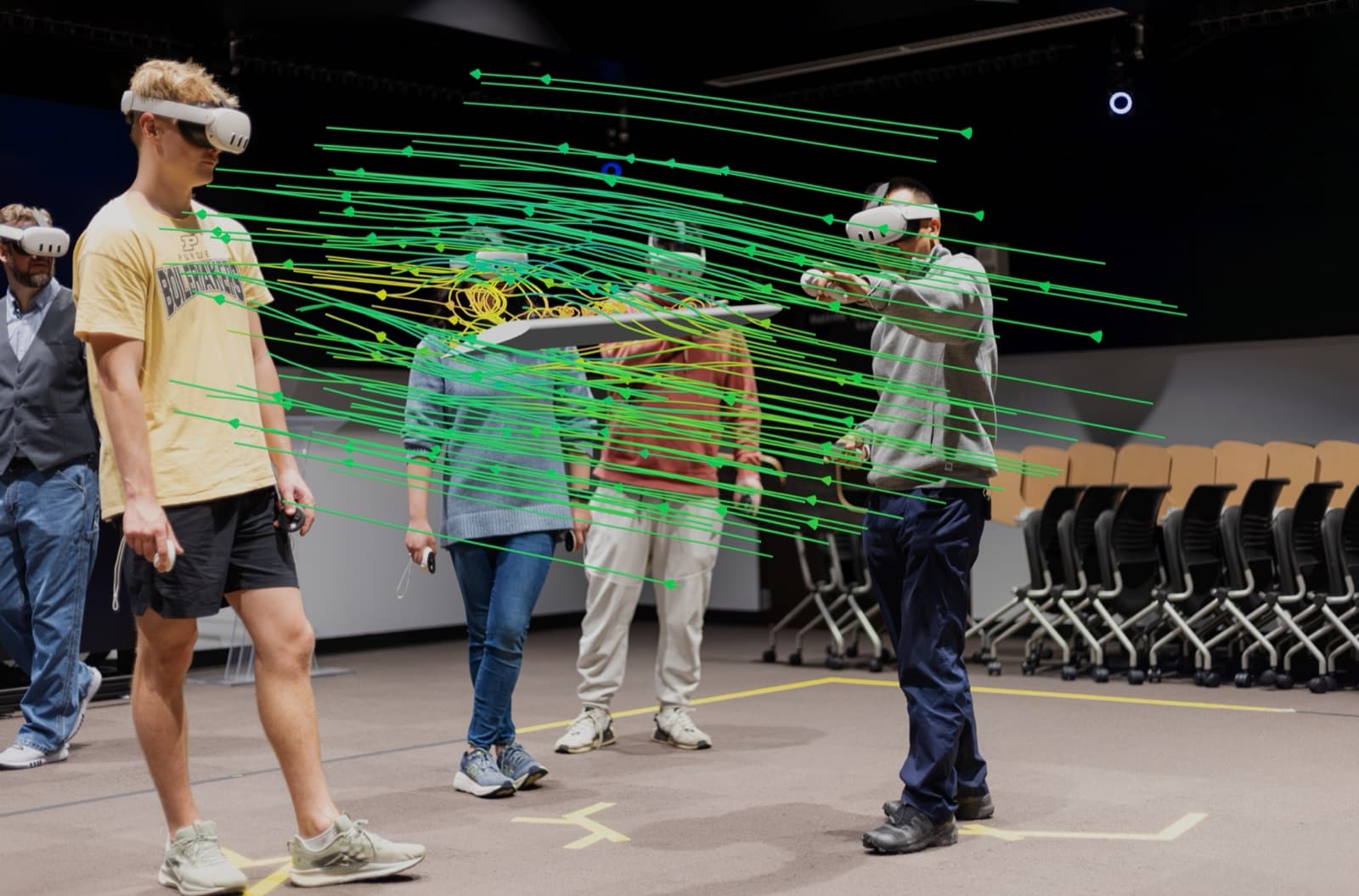
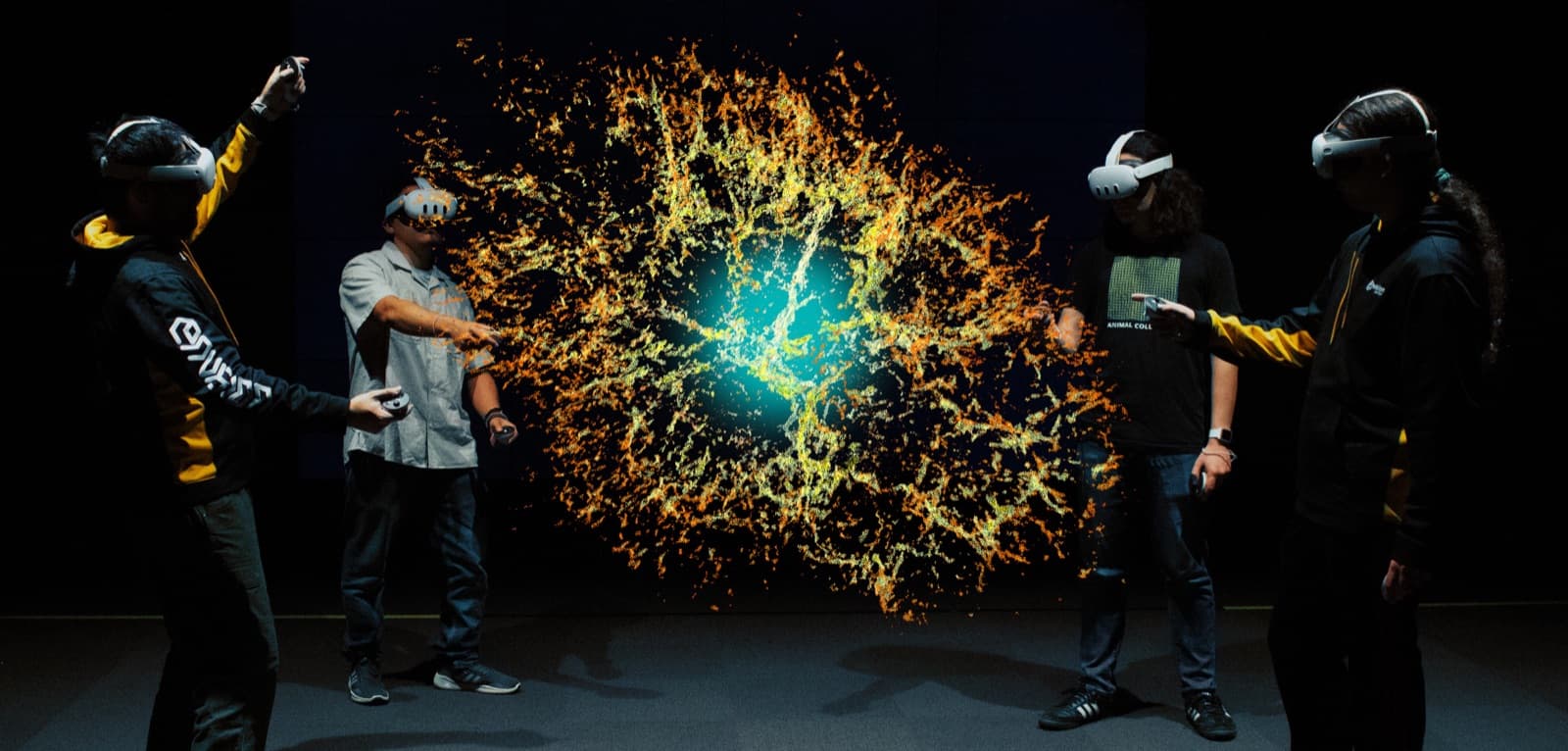
CollabXR itself is a shared mixed reality classroom. A group joins one session from Meta Quest headsets, Apple Vision Pro, or a desktop, and explores the same 3D data together in real time. It handles almost any 3D content; the platform has carried visualizations across astrophysics, geoscience, nursing, cultural heritage and aviation safety. Additionally, the Cesium for Unity integration adds real-world geospatial data on top.
Anyone can build content for it through the mod system without touching the core application. It was released as open source in July 2026 after a pilot with six Purdue instructors, and is now used by NASA and by universities around the world as a tool for collaborative research and education.
One dataset, many headsets
Quest, Vision Pro and desktop all join the same session, so a class can gather around the same model.
Any 3D content
Astrophysics, geoscience, nursing, cultural heritage and aviation safety have all run on it.
Playback system
A timeline that scrubs animation, audio and object state together during a live session. This part is mine.
Geospatial via Cesium
Cesium for Unity brings real-world terrain in, including Google's photorealistic 3D tiles.
Modding without the source
Authors package their own content and host it themselves, so new material needs no build of the app.
Open source
Released publicly so it can be used and extended outside Purdue, with docs and a community Discord.